I took my Out of Country R&R between Sunday, November 23 and Sunday, November 30, 1969. During the month of November, our Battalion CP occupied Hill 65 in the central Dai Loc District in Quang Nam Province. On November 22, 1969, 2/5 Battalion left Hill 65 for operational control of the Arizona Territory. The 2/5 Battalion CP was with its combat troops out in the Arizona Territory. On this day, I left for Da Nang via chopper to begin my R&R in Sydney, Australia. I arrived back in An Hoa on November 30th and resumed my responsibilities by joining Sgt Major Williams (on the left) and Lt Col Higgins (on the right) in the Arizona Territory. I protected these two men, carried and monitored their radio, and helped them by running small errands to get certain officers together for operational discussions. I would get their C-rations for them also.
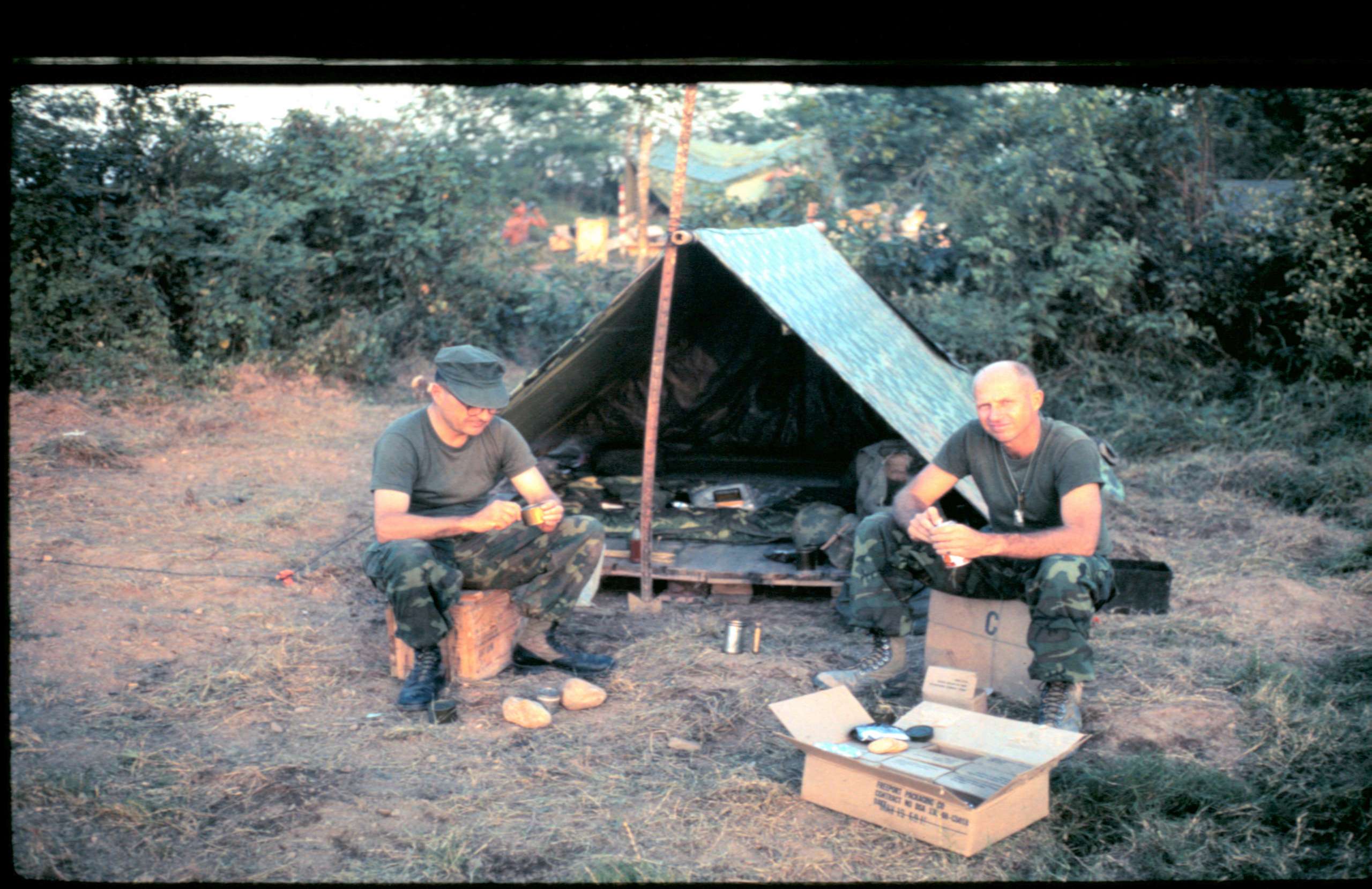
Here is a picture of one of their lean-tos I built for them while in the western part of the Arizona Territory. We moved our Battalion CP very often. Sometimes I dug a foxhole for us if staying for more than one-night, other times not.
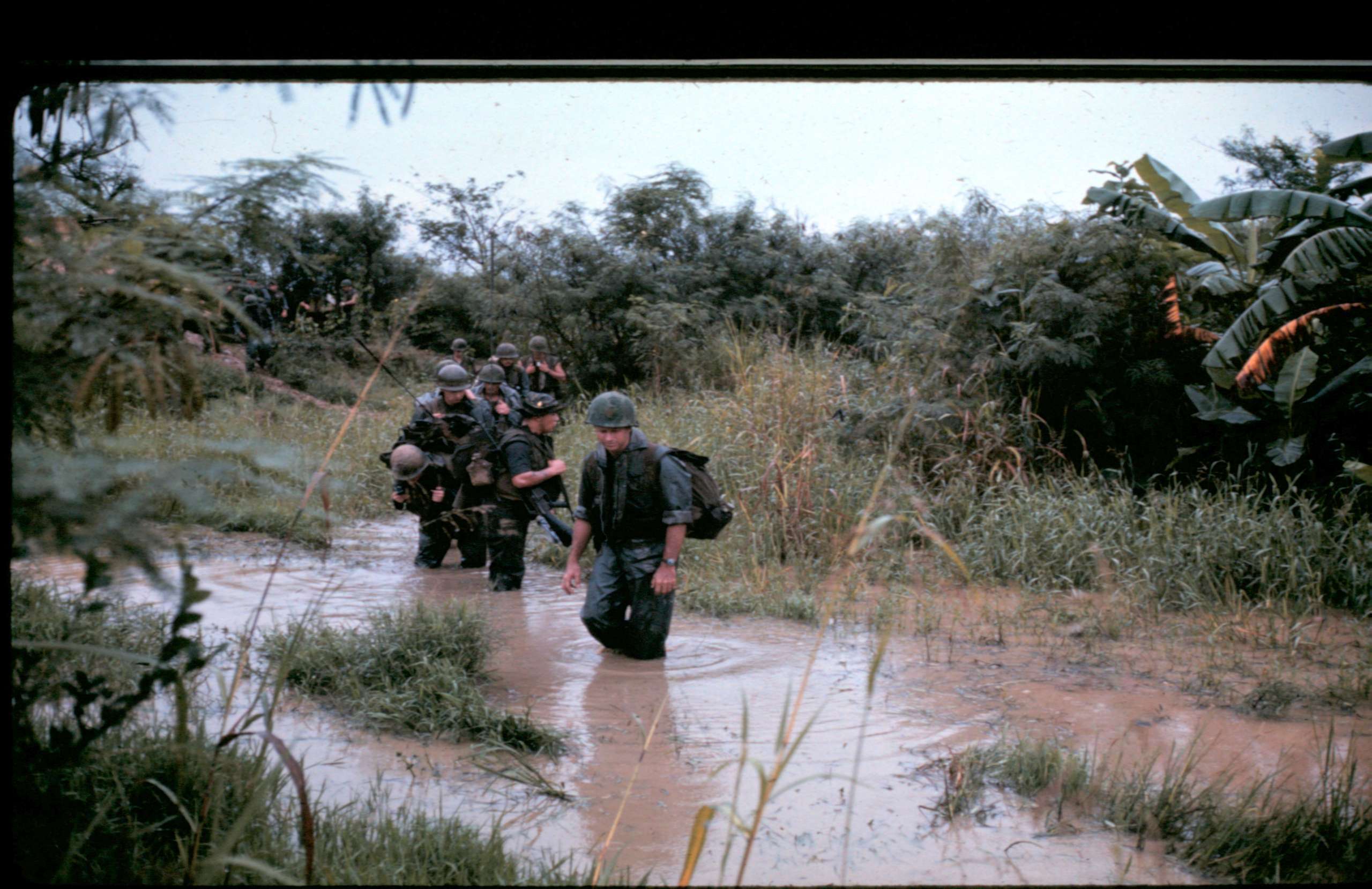
When walking through water, I always went first in front of the CO. The Sgt Major usually followed four or five Marines behind the CO. When on solid ground, I always followed directly behind the CO with my M16 and radio ready. I had been back a full week and had run out of stories to tell everyone about how much fun I had in Sydney on my R&R.
December 7, 1969 was a Sunday. Protestant services were held only twice a month in the field. Usually, the first and third Sunday of the month. Catholic services were held three times a week in the field. I helped read Scripture, prayed, and performed protestant communion with the Battalion Catholic Chaplain on rotating Sundays, including this one, in the bush or back on Hill 65, besides my other duties to the Sgt Major and Lt Colonel. If I couldn’t find someone to relieve me on radio watch during that worship time, I didn’t go help the Chaplain if we were in the bush.
It was a normal day out in the Arizona that day, December 7, 1969. We had a few skirmishes and small amounts of small arms fire contact throughout the day. The terrain around us consisted mainly of rice paddies with patches of high ground scattered throughout the territory. Due to the rain received, the rice paddies were filled with water to an average depth of 2 ½ feet which made movement by foot slow and hazardous. On this day, it was an overcast cloudy day due to earlier rains, no direct sunlight.
While eating dinner at the CP (Command Post) with the Lt Col and the Sgt Major, our command post where we slept were a couple hundred feet from our LZ (Landing Zone), we watched a scheduled resupply helicopter begin entering our LZ. It looked much like the one pictured here.
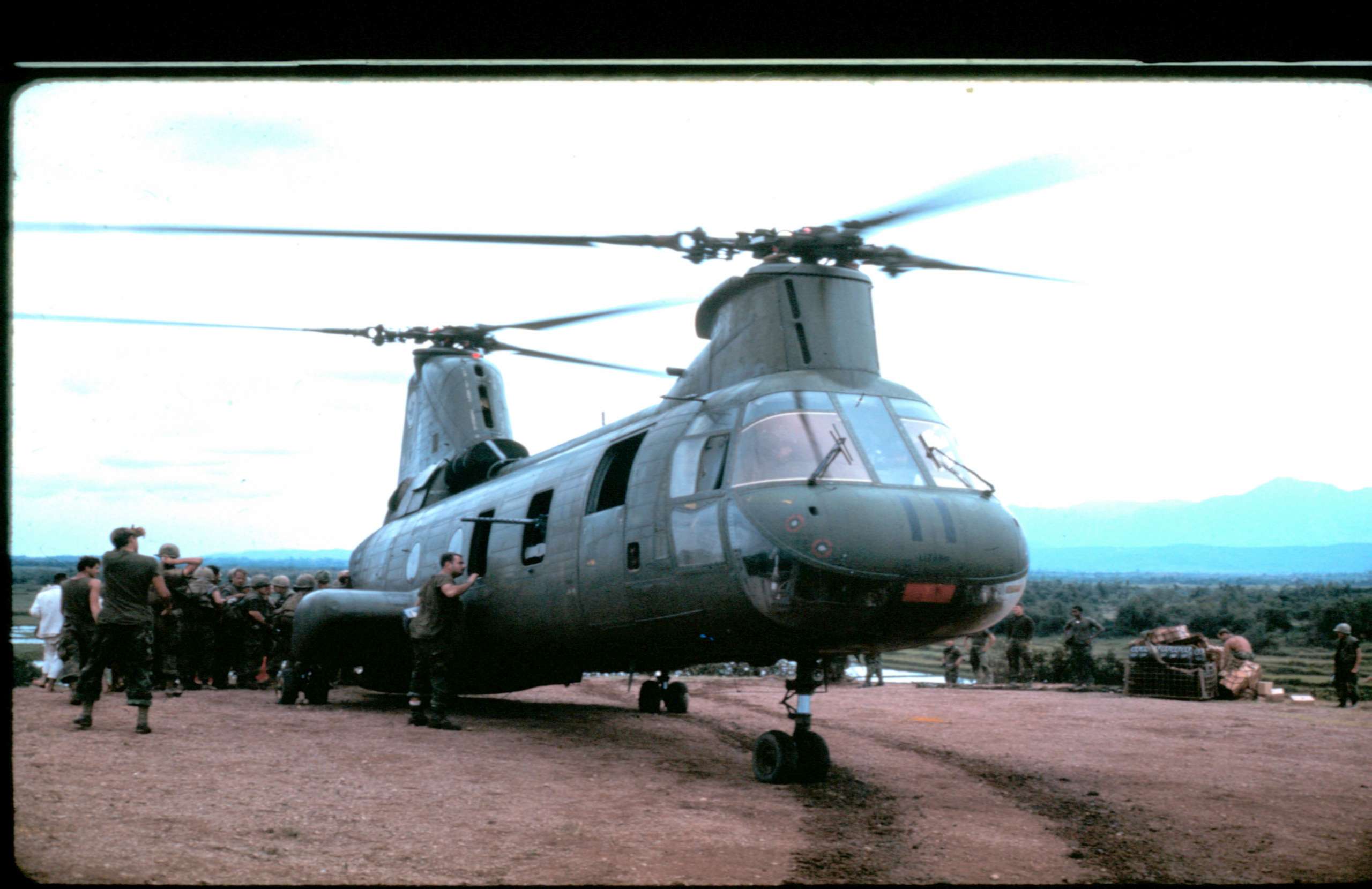
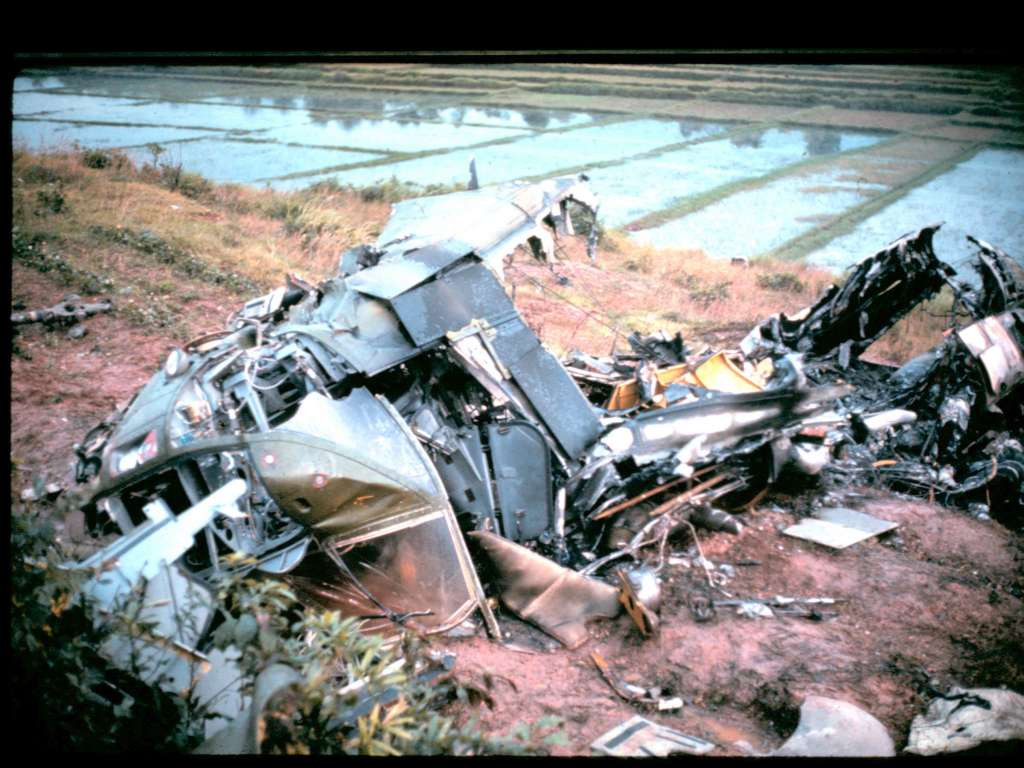
(The LZ was located about 6 to 10 feet above the rice paddy on solid ground.) Seconds later, we heard a large crash on the LZ. I grabbed my flak jacket and helmet and began running towards the LZ while the CO began running behind me towards the LZ. I was concerned about the radioman on the LZ who was guiding the helo to land on the LZ. When I arrived, I saw the helo skidding upside down and came to a complete stop about halfway across the LZ still facing upside down. Then, while still running toward the helo, I saw a big explosion just after I saw a small Vietnamese boy get tossed out of the backend of the helicopter. I spotted the machine gunner/crewman climbing out of the upside down, side window. He ran to tend to the boy who was tossed out. I immediately moved to the front of the helo and began unstrapping the pilot from his seat. The pilot must have misjudged the height of the LZ. He plowed into the side of the LZ hill and then flipped over, nose first upside down.
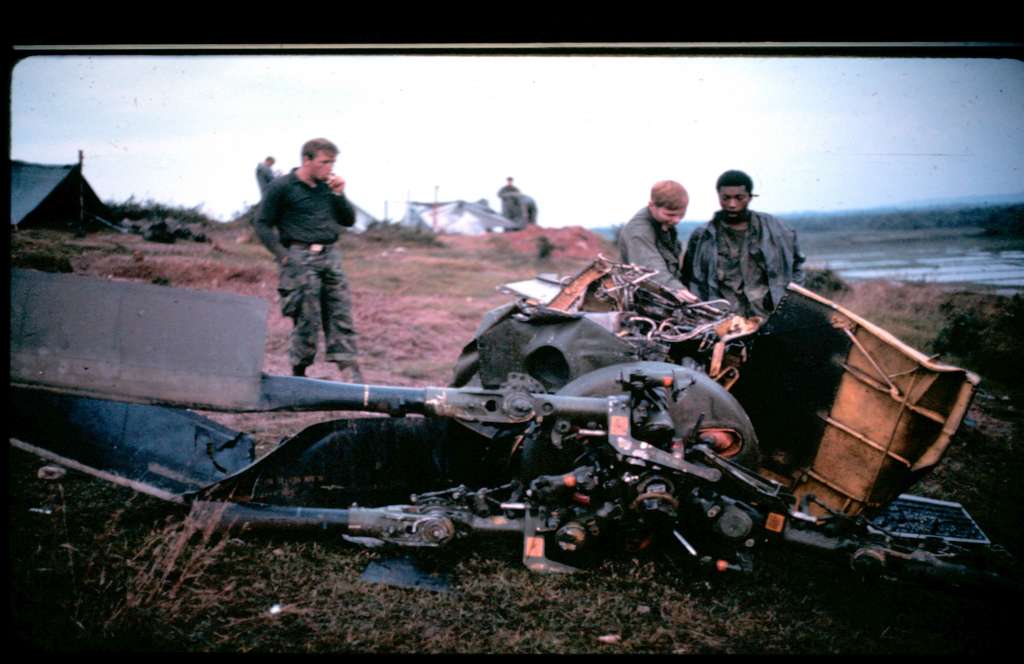
On board was a crew of three, a pilot, a copilot, a gunner/crewman, and a little Vietnamese boy picked up in a medivac situation earlier. The boy was tossed out of the helo when it flipped over. I don’t know what happened to him, but I think he was extremely scared but probably OK. My guess was they were taking him to Da Nang because he probably had Malaria. The helo was bringing us a resupply of weapons and ammo. When it crashed, it flipped upside down on our LZ. Immediately, grenades, and mortars began to explode. It lit up like fireworks, with explosions going everywhere. I was the first to run onto the LZ to assess the damage and locate the Marine on the LZ in his foxhole. I grabbed his radio. I reached both the pilot and copilot, unstrapped them from their seat belts. They were hanging upside down and weren’t breathing. I immediately cleared their airways of all the broken teeth they were choking on. I administered first aid to their bleeding faces and heads after carrying each of them to safety away from the fireworks show.
I then used the PRC-25 radio to call in another medivac for the 4 injured on the first helo. I had the medivac helo come in and land in the rice paddy below us. This happened after I got ahold of the platoon commander and asked that he send his guys out in a perimeter large enough to land a helo in the center of it into the water. That second helo hovered just above the 2.5 foot or so of rice paddy water while we carried the wounded to the helo.
These pictures were taken by me the morning after the evening landing crash on our rice paddy Landing Zone. I believe it was a Boeing CH-46D Chinook helicopter. It crashed on Nov 7, 1969. The crashed helicopter exploded and burned throughout half of the night.
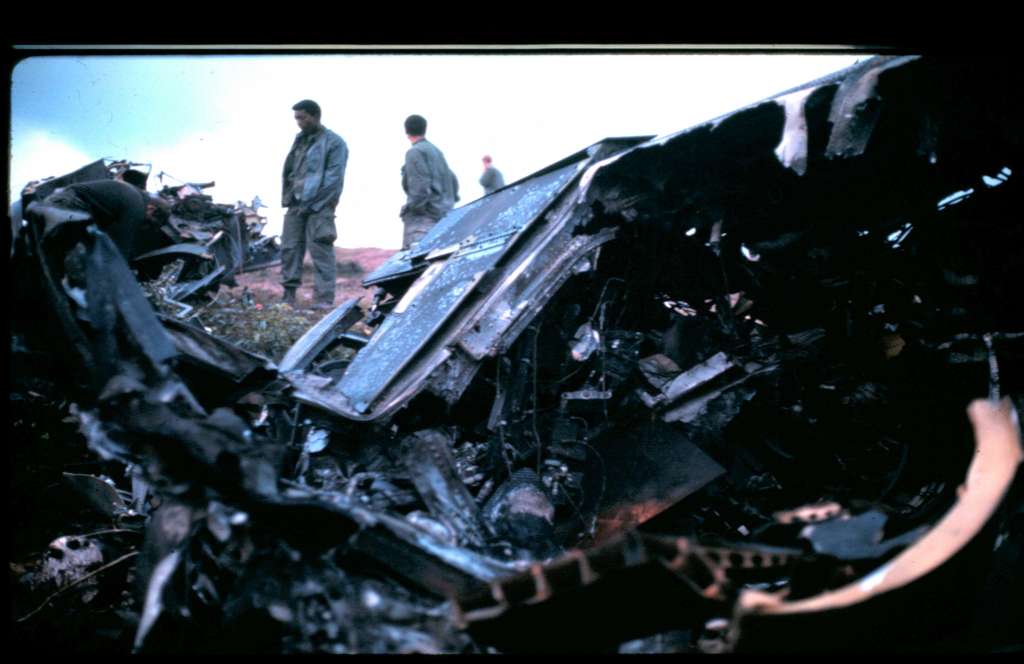
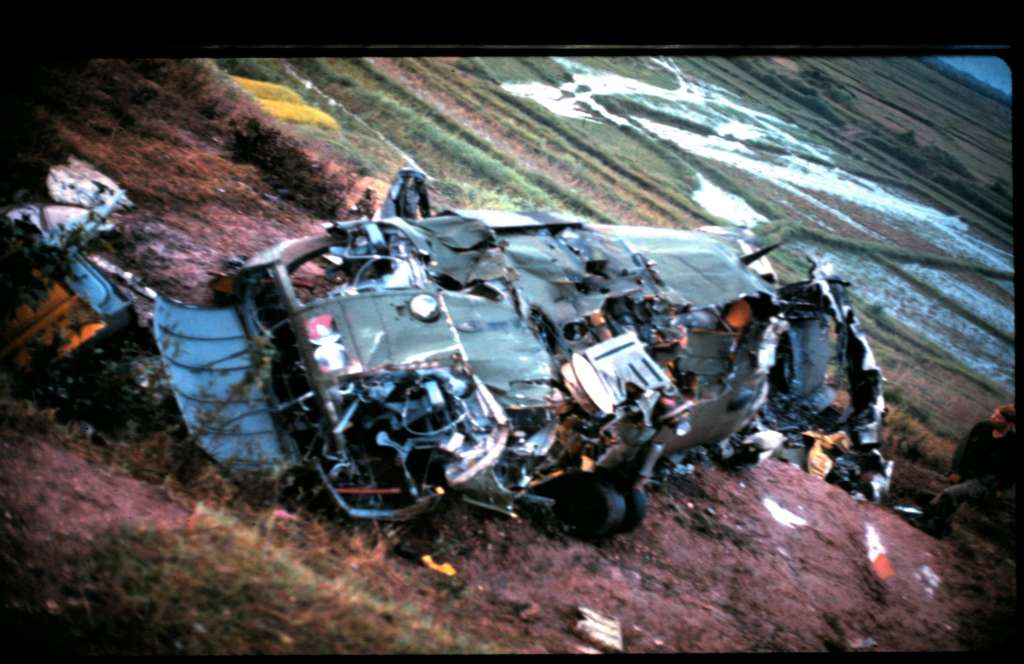
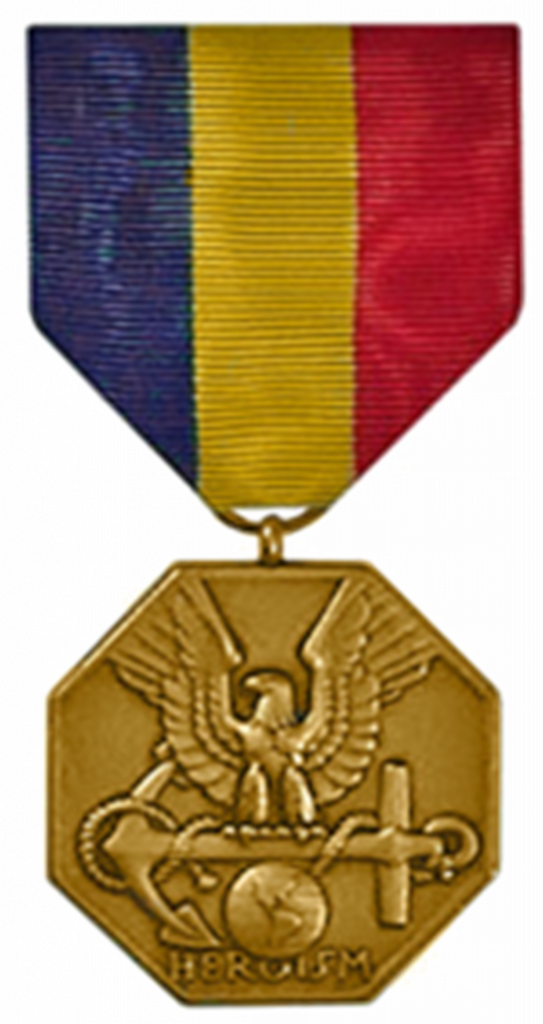
Several months later to my suprise, I received the Navy Marine Corps Medal for Heroism.